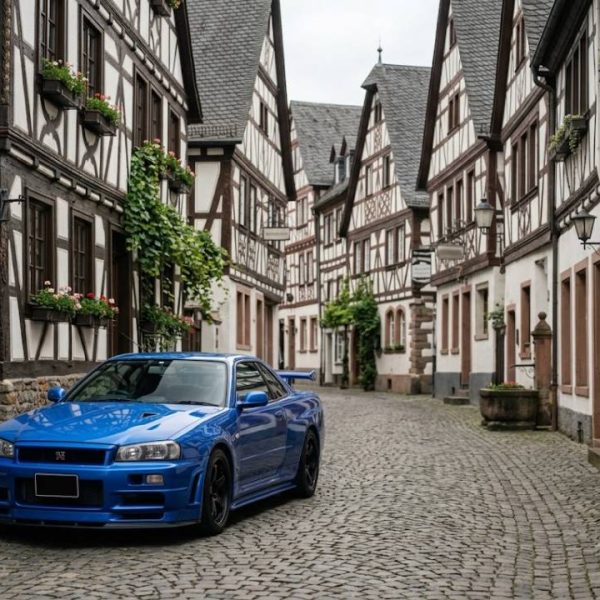
Few cars carry the same aura as the Nissan Skyline R34 GT-R. Built between 1999 and 2002, it combined the twin-turbo RB26DETT, the clever ATTESA E-TS all-wheel drive and a digital multi-function display that looked like science fiction at the time. Two decades later, clean examples are worth serious money, and a growing number of enthusiasts want one parked in their own garage in Munich, Hamburg or Cologne.
Germany is not the easiest country for importing a right-hand-drive Japanese performance car, but it is far from impossible. This guide walks through the main steps and the paperwork that catches people out.
Why Germany is a special case
Unlike the United States, where the 25-year rule decides whether a car can be imported, Germany judges each vehicle on its technical compliance. There is no blanket ban on Japanese market cars. Instead, the car has to pass an individual inspection, usually called an Einzelabnahme under paragraph 21 of the German vehicle regulations, before it can be registered.
The inspection is where most R34 imports succeed or fail. Lighting, emissions, noise, tyres and any modifications are examined closely.
Step 1: Buying the right car
Most R34s still come from Japan, either through auctions or specialist exporters. Some are sourced from the UK, where a large community of owners imported cars in the early 2000s. Before paying, get a full inspection report, check chassis numbers against the documents and confirm the mileage history.
If you are buying from a British seller, you may also end up with a stack of German paperwork later when the car is registered. Plenty of English-speaking owners living in Germany rely on german to english translation services to understand inspection reports, insurance conditions and registration letters.
Step 2: Export papers and shipping
A car leaving Japan needs an export certificate, which replaces the Japanese registration. This document is essential for German customs and the inspection authority. Shipping usually goes by container or roll-on roll-off vessel to Bremerhaven or Hamburg, taking around six to eight weeks.
Keep every document: the export certificate, the bill of lading, the invoice and any auction sheet. Missing paperwork is the single most common cause of delays at registration.
Step 3: Customs and taxes
Cars imported into the EU from Japan generally attract customs duty plus German import VAT. The exact amounts depend on the vehicle's value and any trade agreements in force, so check with customs or a broker before you buy. Vehicles over 30 years old in original condition may qualify for historic status with lower duty, but the R34 does not reach that age until the end of this decade.
Step 4: The technical inspection
This is the big one. An inspector at TÜV, DEKRA or a similar body checks whether the car meets German requirements. Typical issues on Japanese imports include:
- Headlights designed for left-hand traffic that need adjustment or replacement
- Speedometers reading only in kilometres, which is fine, or with limited top speed display
- Aftermarket exhausts that exceed noise limits
- Tyres without the right load or speed rating
- Modifications without documentation
Every modification needs proof: parts certificates, manufacturer data or engineer reports. Many are only available in Japanese or English, which is where careful translation becomes part of the build.
Step 5: Registration and insurance
Once the inspection report is issued, you can register the car at your local vehicle registration office and receive German plates. Insurance for a car like the R34 needs a specialist provider, often with an agreed value policy.
Policies, claims forms and valuation certificates are written in dense German. Owners who are not fluent often use certified german translation services when a valuation needs to be accepted by a foreign bank or an insurer back home.
Language hurdles along the way
Importing an R34 is a multilingual project. You deal with Japanese sellers, English-speaking shipping agents and German authorities. Some owners even buy cars that spent time in France or Belgium, with registration history in French. In that case, french document translation services help to prove ownership history and previous inspections.
For quick understanding of forum posts, parts catalogues or Japanese tuning manuals, a machine translation tool is handy. For anything official, always use a qualified human translator.
Common mistakes to avoid
- Buying without verifying the chassis number and export certificate
- Assuming modifications will pass without paperwork
- Underestimating shipping and inspection time
- Ignoring insurance until the car arrives
- Relying on rough translations for legal documents
Import contracts, customs declarations and registration applications are legal documents, and mistakes in them can stall an import for weeks. This is where dedicated legal translation services earn their keep, because they understand the terminology of purchase agreements, powers of attorney and official certificates. A legal translator keeps names, dates and clause references consistent across every page, so authorities accept the paperwork without queries. For a high-value import like an R34, that precision is a small price compared with the cost of delays.
What an R34 means to German enthusiasts
In Germany, the Nissan Skyline GT-R has a cult following built on video games, films and track days at the Nürburgring. Seeing one on the Autobahn is still rare enough to turn heads at every service station. For many owners, the long import process becomes part of the story they tell at meets.
Final thoughts
Bringing an R34 to Germany takes patience, planning and a solid folder of documents. Get the paperwork right, respect the inspection rules and budget for surprises, and you will be rewarded with one of the most celebrated Japanese performance cars ever built, legally registered on German roads.